




Monk Fruit (Siraitia grosvenorii ) also known as Luo Han Guo
Monk Fruit (Siraitia grosvenorii ) also known as Luo Han Guo, is a herbaceous perennial vine of the Cucurbitaceae (gourd) family, native to southern China and northern Thailand. It is also called La Han Qua in Vietnamese, that is Buddha fruit or longevity fruit.


The plant is cultivated for its fruit, whose extract is nearly 300 times sweeter than sugar and has been used in China as a low-calorie sweetener for cooling drinks and in traditional Chinese medicine.
ETYMOLOGY
The common name comes from the fact that the fruit was first mentioned in the records of 13th-century Chinese monks in Guangxi in the region of Guilin. The scientific species name honors Gilbert Hovey Grosvenor, who as president of the National Geographic Society, helped to fund an expedition in the 1930s to find the living plant in China where it was being cultivated.
THE PLANT


The vine attains a length of 3 to 5 m, climbing over other plants by means of tendrils which twine around anything they touch. The narrow, heart-shaped leaves are 10–20 cm long. The plant produces separate male and female flowers. Female flowers are solitary or occur in clusters of 2-5. About 6-19 male flowers occur on a spike-like inflorescence known as a raceme.
The fruit is round, 6-11 cm in diameter. Immature fruits are yellow-brown with a velvety texture (being covered in fine hairs), eventually becoming smooth and hairless., and greenish in colour, with striations. It has a hard but thin skin. The inside of the fruit contains an edible pulp, which, when dried, forms a thin, light brown, brittle shell about 1 mm in thickness. The seeds are numerous and egg shaped and tightly packed together.
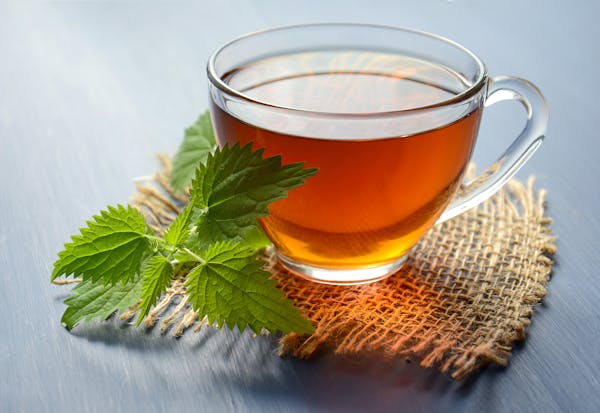
The interior fruit is eaten fresh, and the bitter rind is used to make tea.
CULTIVATION
It is a slow growing vine as seeds take several months to germinate. Grown mainly in Guangxi and Guangdong regions of China, it grows well in the mountainous climate where it is protected from hot sun by the mists.
Rarely found in the wild it is mostly a cultivated crop, that is not of much economic importance due to its slow growing pattern.
The fruit is harvested in the form of a round, green fruit, which becomes brown on drying. It is rarely used in its fresh form, as it is hard to store when fresh.
Thus, the fruits are usually dried before further use and are sold in this fashion in Chinese herbal shops. The fruits are dried slowly in ovens, preserving them and removing most of the unwanted aromas. However, this technique also leads to the formation of several bitter and astringent flavors. This limits the use of the dried fruits and extracts to the preparation of diluted tea, soup, and as a sweetener for products that would usually have sugar or honey added to them.
THE SWEETENER AND MEDICAL APPLICATIONS
The fruit extract is used as a natural sweetener which is 300 times sweeter than sugar, but contains fewer calories. A herbal tea can be prepared by breaking the fruit into pieces and steeping them in hot water.
The sweet taste of the fruit comes mainly from mogrosides that make up about 1% of the flesh of the fresh fruit. Through solvent extraction, a powder containing 80% mogrosides can be obtained.
In Chinese medicine, the fruit is used to treat diabetes and obesity. Fruit extract was shown to have an anti-fatigue effect in mice. It has also been used for treating cough and sore throat and in southern China it is believed to be a longevity aid.
SAFETY
No incidents of negative side effects of Monk fruit have been reported. The US FDA has notified it as generally recognized as safe (GRAS).
Source:
Reference


No comments:
Post a Comment